
It is with sadness that we report the death of Diego Eduardo Frisch so soon after his wife Ruth, as previously reported. Diego was born in 1937 to Tomas and Violeta Frisch, and was the eldest of four children (Diego, Stella, Roberta and Margarita). He was brought up by his grandmother, who was born in London and went to Uruguay as a missionary, and this meant that Diego developed a very transatlantic personality, with a love of England and Englishness that he expressed at the age of 11 when he wrote to Princess Elizabeth to congratulate her on the birth of her son Charles. He kept the reply from Her Lady in Waiting for the rest of his life.
Diego grew up in the Methodist Church in Uruguay, a small denomination which today has 12 pastors and about 1,000 members. When Diego was 20, he took the brave step of booking a passage on a ship to England to study at Cliff College. Whilst his welcome to England was hampered by someone stealing his suitcase at Kings Cross Station, Diego settled well at Cliff and in the Christmas Term was made College Chairman. He visited the Watson family for New Year at the beginning of 1959. It was here that he met Ruth for the first time. Diego moved on to Westhill Youth and Community Training College in Birmingham where he attended Selly Oak Methodist Church, which happened to be the same church that Ruth attended (who by this time was a teacher in Birmingham). He then returned to Uruguay where he began training for his life as a Methodist pastor.
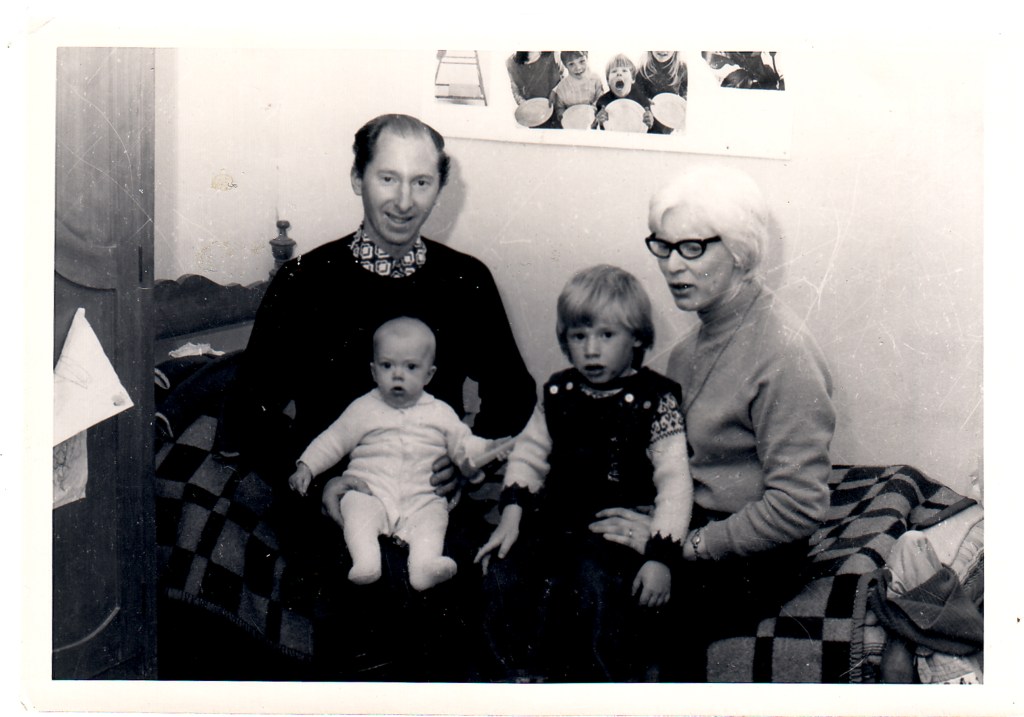
Diego and Ruth were married in Buenos Aires in December 1966 and made their first home together in Sarandi Grande. They had two children, Duncan and Andrea and photographs from this period speak of a loving, warm family who knew how to have fun.
Those who knew Diego in Uruguay described his ministry as being characterised by ‘sensitivity and tenderness.’ He made time for people and was always attentive and ready to listen. Whilst he would not necessarily wear the label, in many ways Diego represented the best characteristics of liberation theology – he cared about people’s living conditions, shared the pain of the poor and suffering, and felt hurt by the injustices he saw around him.
Diego’s clear commitment to practicing what he preached found its most dramatic expression in his refusal to compromise his ministry despite the dangers presented by the civic-military dictatorship that was in power from 1973 to 1985. In these years of repression, surveillance was a way of life, and Diego and Ruth both later recalled numerous ‘visitors’ to church services and events who silently make notes that were almost certainly not intended for devotional purposes.
When the pastor in a neighbouring church was arrested, Diego immediately started to travel each week to Paso de los Toros to serve his friend’s community there, despite the clear risks that this implied. He provided a sympathetic ear and source of support for several members of the church who had relatives in prison. A short time later, he himself was arrested along with the local Roman Catholic pastor, the director of the hospital, and a group of young Catholics and Methodists. Diego was later able to detail some of the physical and mental torture to which he was subjected for 18 days in the Florida Barracks. In an interview conducted in 2014, he described the steady stream of insults and lies to which he was subjected, and the threats made not only to him but his family. At one point, one of Diego’s captors demanded that he declare everything he knew by the following Tuesday or he would be taken to an open grave and shot. Diego replied that if this were to happen, his wife and children would be proud of him. “I am not afraid because I will be with God in heaven,” he recalled saying. “Can you say the same?” The man interrogating him left the room and never appeared again.
After his release from detention Diego went to Australia under the direction of the World Council of Churches. The purpose was to make contact with Uruguayans who had left the country to escape the military dictatorship. His brother Bobby was one of the Uruguayans who had emigrated to Australia during the troubles. Diego visited Sydney, Melbourne and Adelaide.
In 1982 Diego and Ruth came to England and were welcomed into the Birmingham District to Moseley Road Methodist Church, by the Chairman Rev Christopher Hughes Smith who remembered them from his time as the minister at Selly Oak. As was the case throughout their lives together, in Birmingham, Diego and Ruth kept up a ministry with hospitality at its core. Diego firmly believed that the heart of effective ministry was encapsulated in Hebrews 13:2: “Do not neglect to show hospitality to strangers, for by doing so some have entertained angels without knowing it.”
In 1990 Diego and Ruth returned to Uruguay to Salto to serve the church with a focus on working in poorer communities. On retirement, they secured a house in Montevideo but kept on working for many years amongst the children and young people, running a weekly clinic and serving breakfast each Saturday to a large number of poor children.
When Ruth was diagnosed with leukemia in October, difficult times began for both of them. Diego had a fall in February from which he never recovered and died on Saturday 17th April.

Diego Frisch was a loving father and grandfather who never became too busy or tired to enjoy the company of other people. He was a practitioner of radical hospitality who was able to recognise the face of Christ in the suffering of the poor and oppressed, something he expressed not so much in polemical sermons or speeches but in a quiet, sustained and powerful ministry of meeting people where they were. He enjoyed the peace of a walk in the English countryside followed by afternoon tea and, in that sense, he was archetypally English. He also enjoyed large gatherings of family and friends, and people turning up unannounced and, in that sense, he was archetypally Uruguyan. Archetypally English and archetypally Uruguayan, he was uniquely Diego and his life of unreserved dedication will stand as a witness of faith in Christ that will continue to inspire those who knew him for years to come.
Edward Watson with help from family and friends
 Living in the Moments